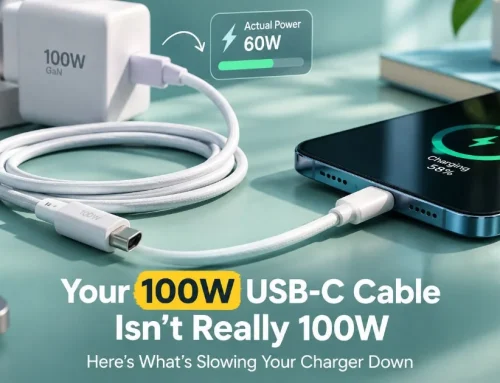
USB PD 3.1 Explained What the 240W Charging Era Means for Your Devices

Introduction
USB PD 3.1 explained is really about one big jump: USB-C charging went from 100W to 240W, a major increase made possible by the Extended Power Range standard. But most people still don’t need 240W. The real question is whether your USB PD 3.1 EPR charger, device, and cable all support the same power requirements. USB-IF says PD 3.1 enables up to 240W over compatible USB-C connections.
That’s why this topic gets a little more interesting than a simple spec upgrade. EPR, backward compatibility, and the
fact that 100W is still enough for a lot of people are all part of the story. If you’ve ever bought a charger and
wondered why it didn’t charge everything at top speed, this is where it starts to make sense.
Quick Highlights
How USB PD 3.1 Got from 100W to 240W
The standard didn’t suddenly appear with 240W out of nowhere. It evolved over time: PD 1.0 in 2012, PD 2.0 in 2014, PD 3.0 in 2019, and PD 3.1 in 2021. That progression matters because the move from PD 3.0 to PD 3.1 is where the ceiling more than doubled.
And that’s not just a numbers game. It explains why gaming laptops and mobile workstations can demand higher power, while USB PD 3.1 Extended Power Range enables compatible USB-C setups to reach up to 240W.
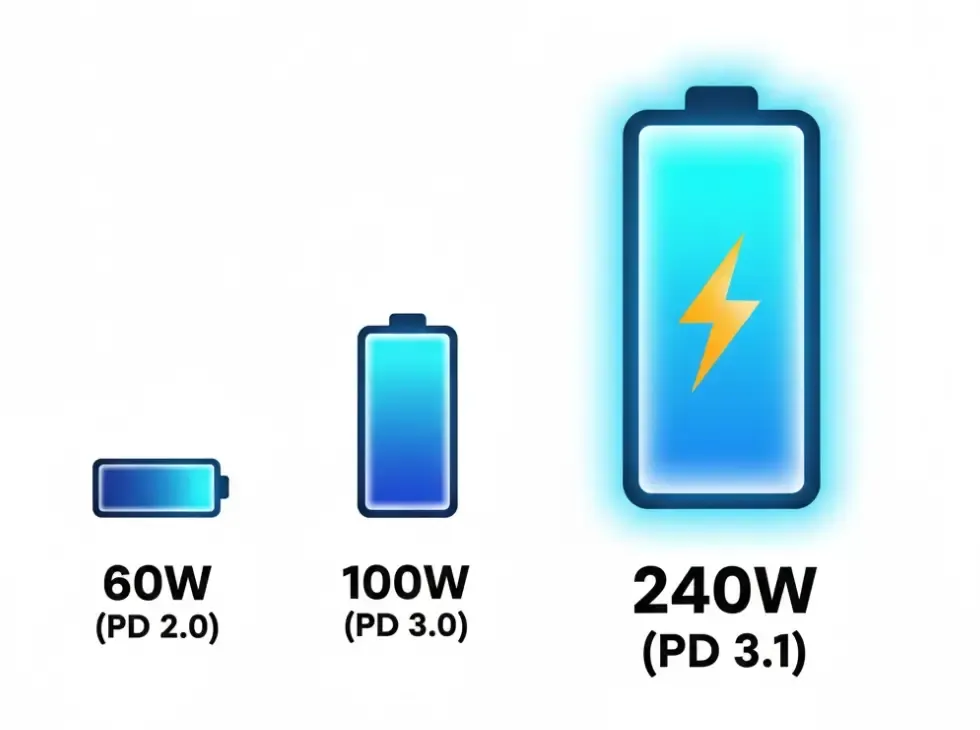
USB PD 3.1 introduced the move beyond the previous 100W limit, opening the door to higher-power applications over USB-C. The standard supports power levels up to 240W with compatible chargers, devices and cables. :contentReference[oaicite:0]{index=0}
What each USB Power Delivery version added
| Version | Released | Max Power | Key change |
|---|---|---|---|
| PD 1.0 | 2012 | 100W | USB-B connector based; market failure due to bulky connectors |
| PD 2.0 | 2014 | 100W | Introduced Type-C connector; 5V–20V voltage rails with bi-directional power |
| PD 3.0 | 2019 | 100W | Introduced PPS programmable power supply for fine-grained voltage tuning |
| PD 3.1 | 2021 | 240W | Introduced EPR extended power range; new 28V/36V/48V rails |
| PD 3.2 | 2025 | 240W | Optimized cable communication; enhanced safety handshake; Qi2 wireless charging integration |
Why EPR is the Real Breakpoint in PD 3.1
PD 3.1 splits charging into SPR and EPR, and that split decides whether you’re capped at 100W or allowed into the 140W, 180W, and 240W tiers. The whole point is higher voltage, not higher current. That’s the key idea most people miss when they first hear about 240W.
SPR stays at 20V@5A for 100W and remains backward compatible with USB Type-C devices made since 2015. EPR adds 28V@5A for 140W, 36V@5A for 180W, and 48V@5A for 240W. In practice, that means the charger can offer more power without forcing the current to go too high.
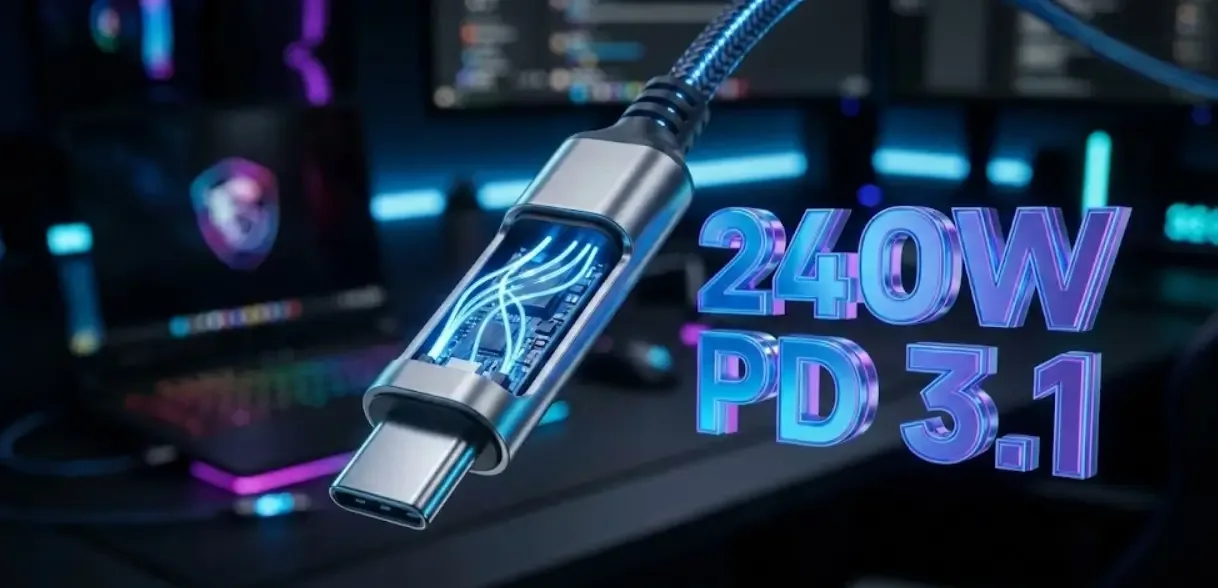
And that matters because pushing current past 5A would make cables too thick and less practical. So PD 3.1 raises voltage instead. It’s a cleaner engineering solution, even if the sticker on the box makes it look a little more dramatic than it really is.
- SPR: 100W maximum at 20V@5A
- EPR: 140W at 28V@5A
- EPR: 180W at 36V@5A
- EPR: 240W at 48V@5A
Why EPR needs better cables, not just a better charger
EPR cables need an E-Marker chip so the charger and device can confirm the cable can safely handle 48V. They also
need improved insulation and better power-management logic inside the device. That’s not just a nice-to-have detail;
it’s what keeps the system sane at higher wattages.
Without those pieces, the 48V side of PD 3.1 stops being useful and starts becoming a safety problem. So if someone
says “it’s just a cable,” that’s only half the story. The cable is part of the safety system.
Where PPS and AVS fit in the charging stack
PPS is the older precision tool in PD 3.1’s world: it adjusts voltage in 20mV steps across 3.3V–21V and helps
efficiency go above 95%. That’s why Samsung’s Super Fast Charging and several Chinese proprietary systems build on
it. It gives the charger more control, which usually means less wasted energy.
AVS is the newer high-voltage version for EPR, adjusting from 28V to 48V in 100mV steps for laptops and mobile
workstations. It exists because high-power USB-C charging needs more than one fixed voltage if it wants to stay
efficient and battery-friendly. A single rigid setting just doesn’t scale well once you’re feeding a hungry laptop.
That split is also why a PD 3.0 PPS charger can still fast-charge Samsung flagship phones at full speed even without
Samsung branding. You don’t always need the brand name if the charging language is the same.
How PPS and AVS differ in practice
| Feature | PPS | AVS |
|---|---|---|
| Voltage range | 3.3V–21V | 28V–48V |
| Adjustment step | 20mV | 100mV |
| Main use | Phones and SPR devices | High-power laptops and workstations |
| Efficiency target | Above 95% | Precise voltage matching for higher-power loads |
What Kind of Charger and Cable You Actually Need
The practical answer is less dramatic than the spec sheet suggests: a 100W GaN charger with 2C1A ports is enough for most people in 2026. EPR chargers only make sense once a USB-C laptop really needs 140W or more. For everyday charging, a good 100W setup is still the sweet spot.
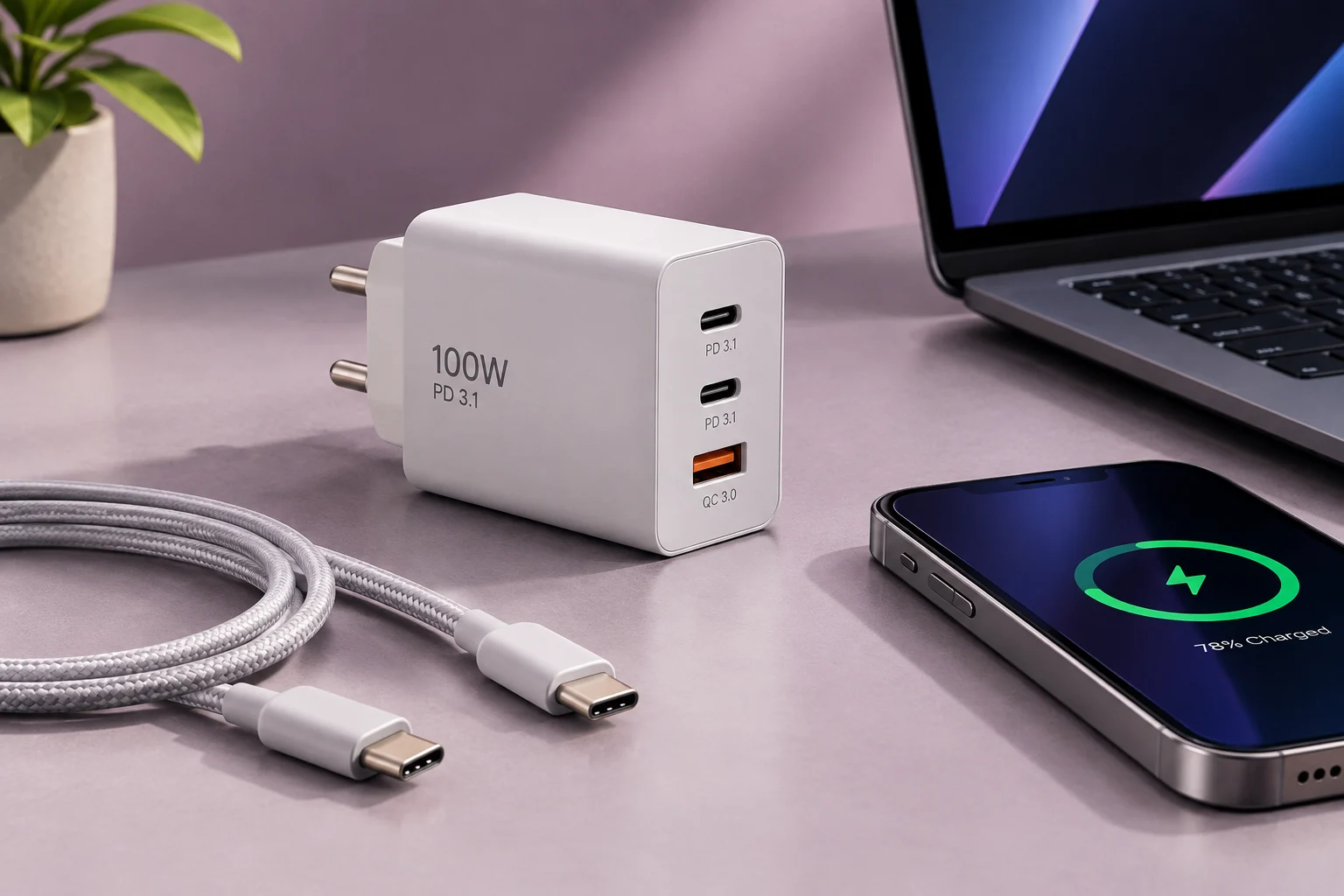
For cables, 20V/5A 100W models are fine for phones and ultrabooks, while 48V/5A 240W EPR cables need an E-Marker chip and thicker wire, typically 22AWG or 21AWG for power conductors instead of 24AWG. That’s the kind of detail people usually ignore until a cable gets hot or charges slower than expected.Cable length matters too. Keep 240W runs at 1.5m or less, while 100W SPR cables can usually go up to 2m safely. So, if you’re buying once and hoping to be done for a while, cable specs are worth a little attention.
Wattage, ports, and use case side by side
| Use case | Recommended power | PD 3.1 tier | Suggested ports |
|---|---|---|---|
| Phone only | 30W–65W | SPR | 1C or 2C |
| Phone + Tablet | 65W–100W | SPR | 2C1A |
| Ultrabook + Phone | 100W–140W | EPR | 2C1A or 3C |
| Gaming Laptop + Multi-Device | 140W–240W | EPR full spec | 3C1A minimum |
Device wattage and real charging-time examples
- iPhone 15 / 16 series: 20W–30W, 0–50% in 20–30 minutes
- iPad Pro: 30W–45W, 0–50% in 30–45 minutes
- MacBook Air M2 / M3: 45W–65W, 0–50% in 45–60 minutes
- MacBook Pro 14″: 65W–96W, 0–50% in 50–70 minutes
- MacBook Pro 16″: 96W–140W, 0–50% in 60–90 minutes
- Dell XPS 15 / 17: 65W–100W, 0–50% in 60–90 minutes
- ASUS ROG gaming laptop: 100W–240W, 0–50% in 90–120 minutes
Why PD 3.1 is winning even beside proprietary fast charging
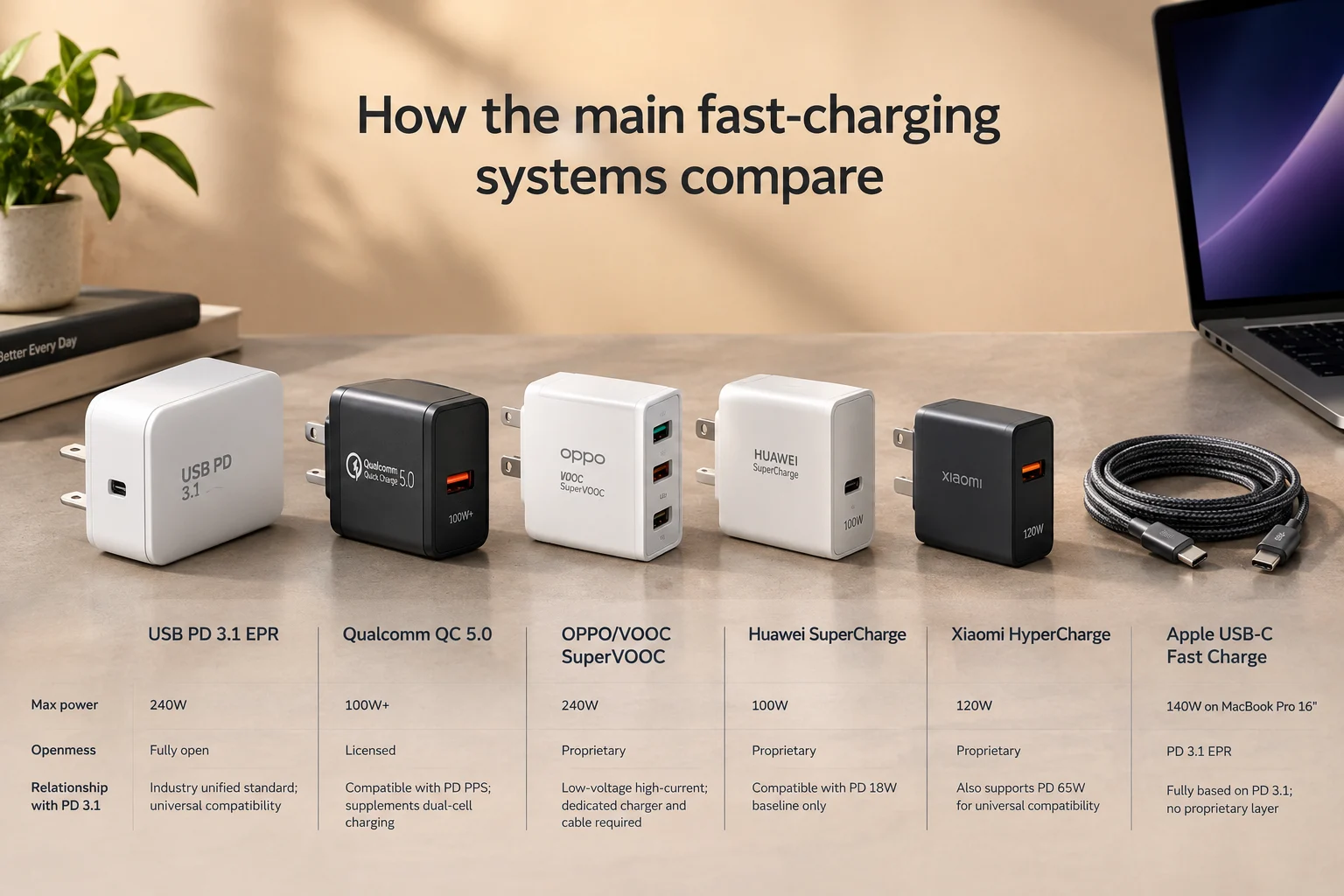
The market is still messy. Qualcomm QC 5.0, OPPO/VOOC SuperVOOC, Huawei SuperCharge, Xiaomi HyperCharge, and Apple
USB-C Fast Charge all sit next to USB PD. But the direction is obvious: laptops, tablets, monitors, and accessories
are converging on PD 3.1.
Apple’s 140W MacBook Pro 16″ charging, Xiaomi’s 120W system, and OPPO’s 240W proprietary approach show the split
clearly, but only Apple is fully based on PD 3.1 EPR. Qualcomm QC 5.0 stays licensed and compatible with PD PPS,
while Huawei SuperCharge is tied to a PD 18W baseline. That’s a lot of different paths, but the trend points the
same way.
For accessory brands, that’s the practical advantage: one USB PD 3.1 EPR charger can cover phones through gaming
laptops without forcing people into brand-specific hardware. If you’ve got a mixed-device desk, that flexibility
matters more than flashy numbers.
How the main fast-charging systems compare
| Protocol | Max power | Openness | Relationship with PD 3.1 |
|---|---|---|---|
| USB PD 3.1 EPR | 240W | Fully open | Industry unified standard; universal compatibility |
| Qualcomm QC 5.0 | 100W+ | Licensed | Compatible with PD PPS; supplements dual-cell charging |
| OPPO/VOOC SuperVOOC | 240W | Proprietary | Low-voltage high-current; dedicated charger and cable required |
| Huawei SuperCharge | 100W | Proprietary | Compatible with PD 18W baseline only |
| Xiaomi HyperCharge | 120W | Proprietary | Also supports PD 65W for universal compatibility |
| Apple USB-C Fast Charge | 140W on MacBook Pro 16″ | PD 3.1 EPR | Fully based on PD 3.1; no proprietary layer |
What happens after PD 3.1: PD 3.2, Qi2, and 360W on the horizon
PD 3.2, released in 2025, keeps the 240W ceiling but refines the communication layer and adds standardized Qi2
wireless charging output. That’s the direction USB charging is heading: fewer protocol headaches, not just more
wattage. In other words, the future is looking more unified, not more complicated.
By 2027–2028, USB-IF is expected to introduce PD 4.0 with up to 360W and bi-directional charging, where a laptop
could charge a phone or the other way around. That sounds futuristic, but the pieces are already moving in that
direction.
The broader implication is less obvious but more important: the charging stack is moving toward one system that works
across wired and wireless use without making the user think about compatibility every time. And honestly, that’s the
part people will appreciate most.
FAQ
The doubts here are the small but real ones people have after looking at a spec chart: compatibility, cable choice,
battery safety, and whether one charger can really replace the pile they already own.
Q: Will PD 3.1 work with my current devices?
Yes. If your device has USB-C and supports USB Power Delivery, the charger will fall back to PD 3.0, PD 2.0, or basic
USB charging as needed.
Q: Do I need special cables for 240W?
Yes. Up to 60W can use standard USB-C cables, 60W–100W needs 100W-rated 5A cables, and 100W–240W requires
EPR-certified 240W cables.
Q: Can one charger replace all my chargers?
Often, yes. A 100W multi-port charger can cover phones, tablets, and many laptops, but the total power is shared
across ports and some specialized gear still needs its own charger.
Q: Is PD 3.1 safe for battery health?
Yes. AVS reduces heat, and many devices—including iPhones and MacBooks—already slow charging around 80% to reduce
battery stress.
Conclusion
USB PD 3.1 is the first charging standard that makes 240W practical without breaking compatibility, and for most
people that still means buying around 100W and stopping there. That’s not a downgrade — it’s just the realistic
middle ground for everyday charging.
If your devices stay in the SPR range, a good 100W USB-C charger is enough; if you’re powering a gaming laptop or
workstation, EPR is the point where USB-C finally starts acting like a real replacement for proprietary bricks. So,
the 240W era is here, but the smartest purchase is still the one that matches your actual devices, not just the
biggest number on the box.