HyperOS 4 vs HyperOS 3 What Has Changed in Design, AI, and Speed?

Introduction
Xiaomi’s HyperOS 4 vs HyperOS 3 comparison comes down to more than a glass-inspired UI. HyperOS 4 adds deeper AI and better optimisation, while the first beta is still limited to China. So if you’re wondering whether this is a true leap or just a nicer coat of paint, you’re not alone. That’s really the whole debate here.
The useful part is figuring out where HyperOS 4 vs HyperOS 3 shows a genuine upgrade and where HyperOS 4 is mostly a cleaner-looking version of the same idea. And honestly, that distinction matters more than any marketing line because most people don’t care about buzzwords. They care about how the phone feels in the hand.
Quick Highlights
- HyperOS 4 looks more layered and glass-like.
- AI features go deeper, especially on newer devices.
- Speed gains depend a lot on the phone itself.
- Personalisation feels more flexible on big screens.
- The first beta is still China-only for now.
How the design changed between HyperOS 3 and HyperOS 4
HyperOS 3 already pushed home screen changes, new icons, improved widgets, AI Dynamic Wallpapers, personalised lock
screens, and Xiaomi HyperIsland. It was a decent step forward, especially if you like tweaking your phone until it
feels a bit more yours. The layout got smarter, the visuals felt fresher, and Xiaomi clearly wanted the interface to
feel more modern without making it weird.
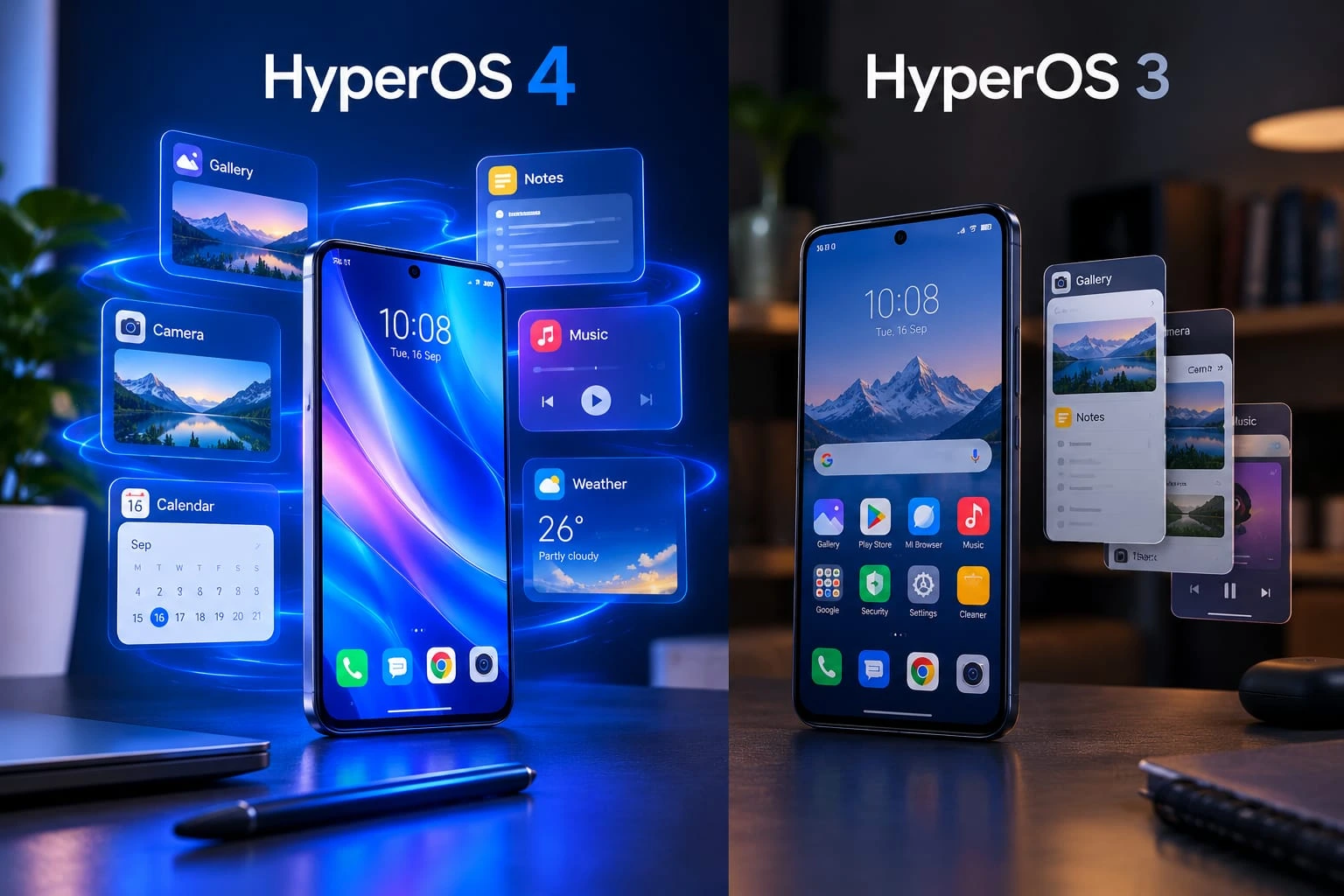
HyperOS 4 moves harder on appearance with the Soft Light Glass design language, using translucent surfaces, blur,
lighting, and depth to make the interface look more like layered glass. That sounds like a tiny visual tweak on
paper, but in real use it can change the whole mood of the phone. It makes the system feel more atmospheric, a
little softer, and much more deliberate.
That’s why the new build feels visibly different rather than just lightly refreshed. HyperOS 3 was already cleaner
than older Xiaomi software, but HyperOS 4 seems to lean into a more premium, almost floating visual style. If you’ve
ever used a phone that just felt visually busy, this is the opposite direction.
What Xiaomi changed on the lock screen, widgets, and folders
HyperOS 4 adds redesigned clock faces, stacked notifications, widgets, and folders, so the personalisation work is
not just cosmetic polish. You can feel that Xiaomi is trying to make the interface more useful while also making it
look better, which is the sweet spot most Android skins chase but don’t always hit.
The older version already had a redesigned home screen and more than 100 per cent refined system animations; the
newer one simply goes further in making the UI look deliberate. In practice, that means the phone doesn’t just feel
“updated.” It feels composed. Small things like how a folder opens, how a widget sits on the page, or how a
notification stacks up can matter more than people expect.
And that’s part of the appeal here. HyperOS 4 isn’t screaming for attention with flashy gimmicks. It’s trying to make
the whole system feel calmer and more cohesive, which is often what makes an interface feel expensive rather than
busy.
Whether HyperOS 4 is actually faster and smoother than HyperOS 3
HyperOS 3 focused on faster graphics, better rendering, refined animations, and a smoother overall feel. That already set a pretty decent baseline. So the obvious question is whether HyperOS 4 goes beyond cosmetic polish and actually feels quicker when you’re switching apps, opening the camera, or just moving around the system.
HyperOS 4 shifts the emphasis toward system optimisation and stability, with reports of Rust-based system apps and
kernel-level optimisations aimed at faster app loading and better efficiency. Now, that’s where it gets interesting.
Because optimisation is one of those things you don’t always notice when it works well, but you definitely notice
when a phone starts lagging, stuttering, or chewing through battery too fast.
The catch is that chipset, RAM, and device-level tuning still decide how much you notice in day-to-day use. That
means two phones on the same software version can still feel pretty different. One may feel snappy and steady, while
another feels only slightly improved. So yes, HyperOS 4 may be better tuned, but it isn’t magic.
Why not every HyperOS 4 phone will feel faster
Xiaomi itself is not promising a universal speed jump, because the actual result depends on hardware and
optimisation. That’s a pretty honest position, even if it’s not the kind of answer people love. But it’s true.
Software updates can improve the experience, yet they can’t turn every phone into a flagship.
- Chipset quality matters.
- RAM size matters.
- Device-specific optimisation matters.
If you’ve ever seen a software update that sounded huge but felt only mildly better, you already know the pattern. A
more polished animation package might make the phone feel smoother, but a stronger processor and better thermal
tuning are what really decide whether the system feels consistently fast. In other words, HyperOS 4 can improve the
ride, but it can’t rebuild the engine.
That’s why people on newer Xiaomi phones are more likely to notice the gains. On older hardware, the difference may
show up more in stability and app responsiveness than in raw speed. And honestly, that still counts. A phone that
feels less jittery is often the more satisfying phone, even if benchmark numbers don’t look dramatic.
What changed in AI, multitasking, and personalisation
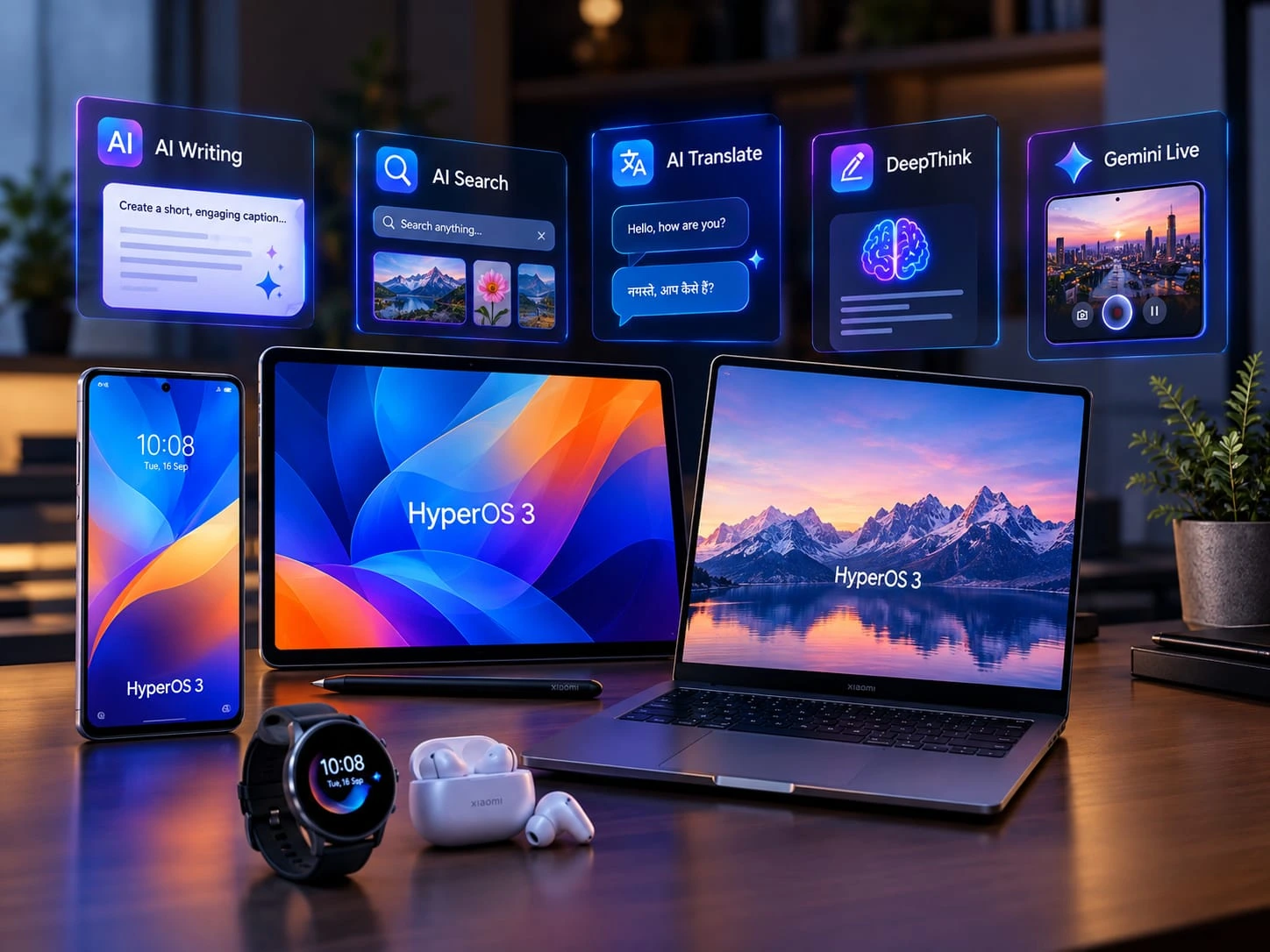
HyperOS 3 already had a serious AI layer with AI Writing, AI Search, AI Speech Recognition, AI Translate, DeepThink
mode in Notes, and Gemini Live for camera and screen sharing on compatible devices. That’s a lot already, and it
shows Xiaomi was not treating AI as a side feature. It was becoming part of the everyday workflow.
HyperOS 4 pushes that further with Super XiaoAi 2.0, built on Xiaomi’s MiMo large language model, plus AI features
for notes, recordings, image editing, translation, and content creation. So instead of feeling like a few scattered
smart tools, the AI layer seems more connected. It’s trying to be the thing that helps across different tasks, not
just in one app or one corner of the phone.
Multitasking and personalisation also get more flexible, especially on larger screens. That matters more than it
sounds. On a phone, customisation is nice. On a tablet or big-screen device, it can change how usable the whole
interface feels. When a UI can adapt better to your layout, it stops feeling like a stretched-out phone interface
and starts feeling properly designed.
The multitasking changes that matter most on tablets and big phones
HyperOS 3 already included floating windows, better multitasking, stronger tablet support, and more flexible Gallery
layouts and search. That gave Xiaomi a decent foundation for people who split time between media, work, and
messaging. It wasn’t perfect, but it was more capable than a lot of Android skins that still treat big screens like
an afterthought.
HyperOS 4 adds customisable large folders, stacked widgets, a more streamlined notification layout, and reports of an
AI-powered floating island and other adaptive interface elements. That’s a meaningful shift if you use a tablet or a
larger phone and like keeping things organised without digging through menus. The point isn’t just to add features.
It’s to make the interface behave more naturally in different spaces.
And that’s where the experience starts to feel more mature. A stacked widget arrangement or a cleaner notification
flow may sound like small things, but they reduce friction. You spend less time managing the phone and more time
actually using it. That’s the kind of change you notice after a week, not in a screenshot.
Which phones and tablets are expected to get HyperOS 4
The rollout list is broad, but it is still an expected-device list rather than a final guarantee for every model.
That’s worth keeping in mind because software availability can shift as Xiaomi tests build stability, regional
support, and hardware compatibility. In other words, being on a list is encouraging, but it’s not a promise until
the update actually shows up.
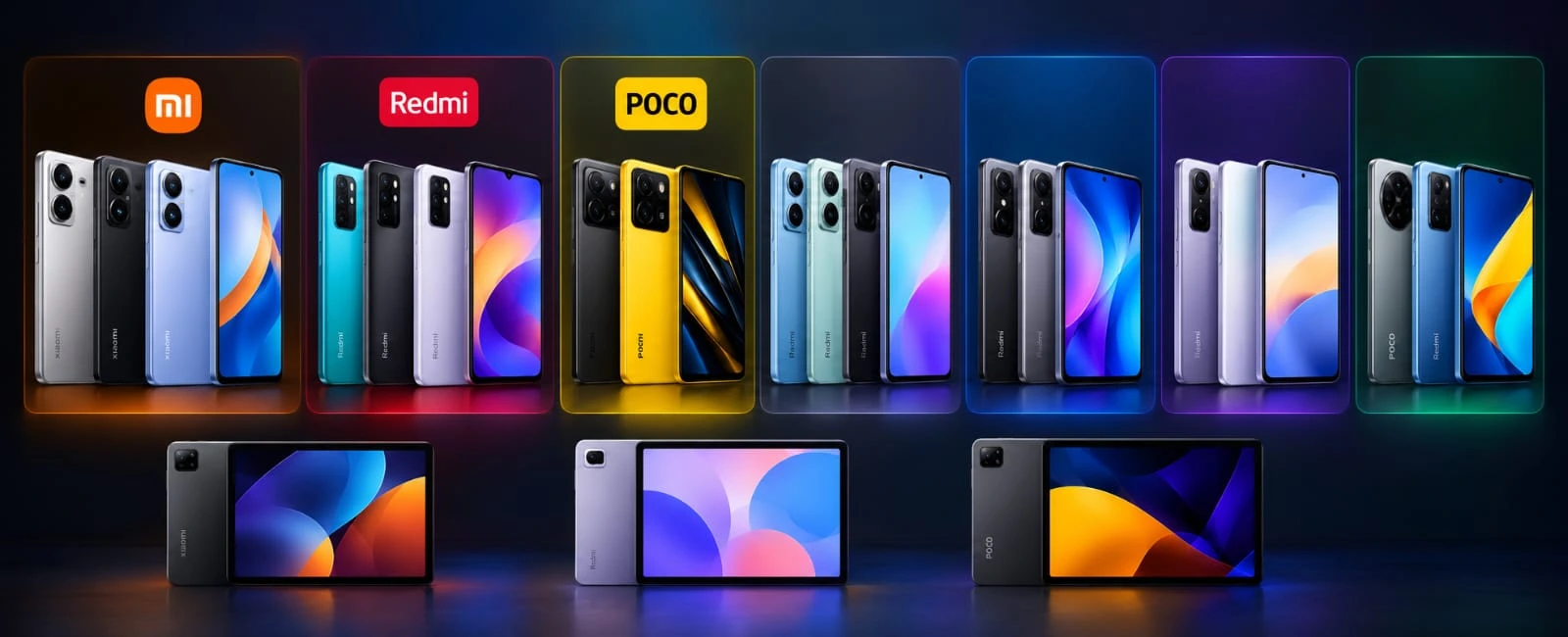
Xiaomi, Redmi, POCO, and tablets are all included, spanning flagships, T-series phones, Note models, F-series
devices, and multiple Pad models. So the update is not being treated like a tiny flagship-only experiment. It looks
like a wider platform push, which is good news for people who don’t always buy the most expensive model.
| Brand | Eligible / expected devices | Examples from the raw list |
|---|---|---|
| Xiaomi | Flagships and T-series models | Xiaomi 17, 17 Pro, 17 Pro Max, 17 Ultra, 17 Max, 17T, 17T Pro |
| Xiaomi | Previous generations | Xiaomi 15, 15 Pro, 15 Ultra, 15S Pro, 15T, 15T Pro; Xiaomi 14, 14 Pro, 14 Ultra, 14T, 14T Pro, 14 Civi; Xiaomi 13, 13T, 13T Pro, MIX Flip, MIX Flip 2 |
| Redmi | K, Note, Turbo, and 15 series | Redmi K90, K90 Pro Max, K80, K80 Pro, K80 Ultra, K100 Pro; Redmi Note 15 series, Note 14 series, Turbo 5, 15 series, 15C |
| POCO | F and X series | POCO F8 series, F7 series, F6 series, X8 Pro, X7 series |
| Tablets | Pad and Redmi Pad lines | Xiaomi Pad 8, Pad 8 Pro, Pad 7 Ultra, Redmi K Pad 2, Redmi Pad 2 series, POCO Pad |
Still, I’d be careful about reading that list too literally. Release schedules can change, and sometimes a device
gets a staged rollout in one region before another. If you own one of these phones or tablets, the real answer is
usually the same: wait for the official build to appear in your update channel, then see how stable it is before
getting too excited.
FAQ
These questions usually come up when readers are trying to decide whether HyperOS 4 is a real upgrade, when it will
reach their phone, or whether the new AI and design changes are enough to matter.
Q: Is HyperOS 4 better than HyperOS 3?
Yes, if you care about a more polished look, deeper AI, and stronger system tuning. HyperOS 3 was already solid, but
HyperOS 4 is the more ambitious update. It feels like Xiaomi is trying to make the experience more complete, not
just prettier.
Q: When will HyperOS 4 roll out globally?
Xiaomi has not announced a full global rollout schedule yet. The first beta is currently only available in China. So
if you’re outside China, patience is still part of the deal.
Q: What is the Soft Light Glass design in HyperOS 4?
It is Xiaomi’s new visual language built around translucent surfaces, blur effects, lighting, and depth. The result
is a glass-like interface that is meant to feel more refined than HyperOS 3. It’s basically Xiaomi saying the screen
should feel layered instead of flat.
Q: What is Super XiaoAi 2.0 based on?
It is based on Xiaomi’s MiMo large language model, and it is meant to handle more complex tasks across the device.
That gives the AI system a stronger backbone than a simple assistant layer.
Conclusion
HyperOS 4 is the clearer, more ambitious version of Xiaomi’s software: more visual polish, more AI depth, and more
tuning under the hood. It doesn’t just feel like a minor yearly refresh. It feels like Xiaomi is pushing the
platform toward a more coherent identity.
If you want the short answer to HyperOS 4 vs HyperOS 3, the new release matters most for design and intelligence,
while real speed gains will depend on the phone itself. That’s the honest takeaway. Some users will notice the
difference immediately, especially on supported devices with solid hardware. Others may mostly see a nicer interface
and a smarter set of tools, which still isn’t a bad outcome at all.
In the end, HyperOS 4 looks like the version that tries to make everything fit together better. And when a phone
software update gets that part right, it usually feels better to live with every single day.