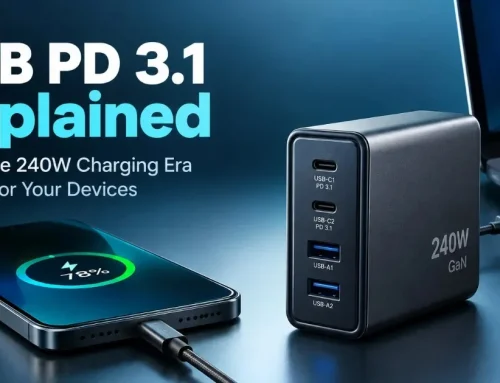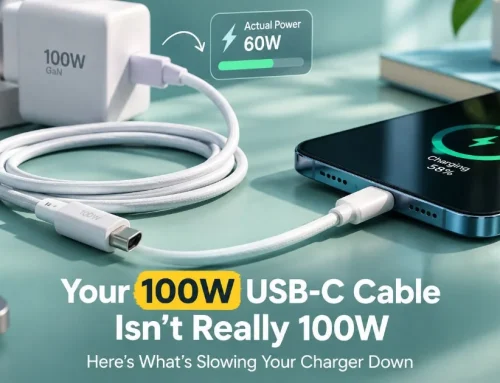
Multi Port vs Single Port Chargers What Actually Works Better Today Without the Usual Guessing

Walk into any online store today and chargers don’t look like boring accessories anymore. They’ve become tiny power hubs, and honestly, that’s both helpful and a little annoying. Helpful because one good charger can now handle your phone, earbuds, smartwatch, and sometimes even a laptop. Annoying because now you have to choose between **Multi Port vs Single Port Chargers**, and the “best” pick depends way more on your routine than most people expect.
That’s where a lot of buyers get tripped up. A charger with more ports sounds smarter right away, but a single port model can still be the better choice if speed is your main concern. So, instead of treating this like a spec sheet battle, let’s talk about what actually works in real life.
Quick Highlights
- Single port chargers usually give the fastest charge to one device.
- Multi port chargers are better for daily multi device use and travel.
- Power gets shared when several devices are plugged in.
- GaN chargers are smaller, cooler, and more efficient.
- The right choice depends on your devices, not hype.
Why this choice matters more now
Charging tech has moved fast. A few years ago, it was enough to ask, “Does it charge my phone?” Now the conversation is more like, “Can it charge my phone, earbuds, smartwatch, and laptop without turning my desk into a cable jungle?” That’s a real change.
With fast charging, GaN technology, USB C everywhere, and more people carrying multiple gadgets every day, your charger is no longer just a wall plug. It’s part of how smoothly your day runs. And if you’ve ever waited around for one device because another was hogging the charger, you already know how quickly this becomes a practical issue.
Most people today are dealing with at least three or four devices. A smartphone. Earbuds. A smartwatch. Maybe a tablet or laptop. So the old “one charger does all” idea only works if that charger is actually built for your lifestyle.
Single port charger: simple, focused, and fast
A single port charger is exactly what it sounds like. One output. One device. No juggling. No power splitting. That simplicity is actually its biggest strength.
If you plug in just one device, the charger can usually send its full available wattage straight to that device. That means faster charging, better consistency, and fewer surprises. A 30W or 65W single port charger is often a solid pick for someone who wants quick top ups without extra complexity.
There’s also something to be said for stability. Since power isn’t being divided between multiple gadgets, the charging process tends to stay more predictable. You’re less likely to wonder why one device suddenly feels slower than it should.
Where single port chargers do well:
- Fastest charging for one device
- Usually cheaper
- Simple to use
- Good for dedicated laptop or phone charging
But the tradeoff is pretty obvious. If you own multiple devices, a single port charger starts to feel limited very quickly. You can only charge one thing at a time, and that means either waiting or buying more chargers. That’s where the convenience starts to disappear.
Multi port charger: the convenience almost makes the case by itself
A multi port charger comes with two or more output ports, often mixing USB A and USB C. This is where things get more interesting, because one adapter can now handle several devices at once. And in 2026, that matters a lot.
The biggest benefit is obvious: fewer chargers, fewer outlets, fewer headaches. You can leave one by your bed, one on your desk, or pack one for travel and cover almost everything. If you’re someone who hates cable clutter, this is a big deal. Not a small one. A real quality of life upgrade.
Modern multi port chargers are also getting smarter. They can detect connected devices and distribute power more efficiently than older models ever could. That means your phone isn’t just randomly fighting your laptop for juice. The charger is deciding where power should go, based on what’s connected.
Why people like multi port chargers:
- Charge several devices at once
- Cleaner desk and travel setup
- One adapter replaces multiple chargers
- Great for phones, earbuds, watches, and tablets
That said, there’s a catch that a lot of people miss.
The part most buyers don’t think about: power gets shared
Here’s the thing. A multi port charger doesn’t magically create extra power just because it has extra ports. It still has a total wattage limit. When you plug in multiple devices, that power gets divided.
So if you’re using a 65W multi port charger, it might send 45W to a laptop and the remaining 20W to a phone. That’s still useful, but it means neither device is always getting maximum speed. And this is where expectations can get messy.
People often assume a powerful charger means every connected device will charge at full speed. Not really. The total output stays the same. The charger simply splits it intelligently.
That’s not a flaw, exactly. It’s just how multi port charging works. Once you understand that, you stop overbuying or blaming a charger for doing what it was designed to do.
Multi port vs single port chargers at a glance
| Feature | Single Port Charger | Multi Port Charger |
|---|---|---|
| Charging speed | Fastest for one device | Slower when several devices are connected |
| Convenience | Limited | Very convenient |
| Portability | Compact but basic | Slightly bigger, but replaces multiple chargers |
| Price | Usually cheaper | Higher upfront, better long-term value |
| Best for | Focused charging, laptops, budget users | Travel, desks, and multi device routines |
So which one wins on speed?
If speed is the only thing you care about, the single port charger usually wins. It can deliver its full wattage to one device without splitting power around. That’s why it’s a strong option for people who want maximum fast charging and don’t want to think too much about setup.
But if you’re charging multiple devices at once, the multi port charger becomes more practical, even if it isn’t the absolute fastest per device. In real life, convenience often beats perfect speed. You might not notice a ten minute difference, but you will notice not having to swap chargers all evening.
When a single port charger makes more sense
Go with a single port charger if you usually charge one device at a time, especially if that device is a phone or laptop that needs focused power. It’s also a sensible pick if you’re keeping costs low or want a dedicated charger for one gadget.
That makes a lot of sense for people who:
- Charge mostly overnight
- Use a separate laptop charger already
- Want the fastest possible top up for one device
- Prefer a no fuss, budget friendly option
In other words, if your charging routine is simple, don’t overcomplicate it. A single port charger does the job well.
When a multi port charger is the smarter buy
Now, if you’re juggling multiple gadgets daily, the answer starts leaning heavily toward a multi port charger. This is especially true if you travel a lot, work from a desk, or hate the look and mess of several adapters spread across one outlet.
Imagine this: phone on one side, earbuds on the other, smartwatch tucked in somewhere, and maybe a tablet or laptop in the mix. Instead of carrying four separate chargers, one good multi port adapter handles it all. That’s not just neat. It’s genuinely more practical.
For most people in 2026, that’s the bigger argument. Our devices have multiplied. Our charger setup should probably do the same.
What most people get wrong before buying
A common mistake is seeing a high wattage multi port charger and assuming every device will get full power all the time. That’s not how these work. The total output is shared based on what’s plugged in, the power demands of each device, and the charger’s internal design.
So before buying, it helps to check a few basics:
- Total wattage — ideally 65W or more if you have mixed devices
- Number of ports — think about what you’ll actually plug in
- Fast charging support — look for PD and PPS support
- Safety features — overheating protection matters more than people think
This is where some cheaper chargers quietly disappoint. They may look powerful on paper, but poor power management or weak safety can make them a bad long term choice.
GaN chargers are changing the game
One reason chargers have gotten so much better is GaN technology, short for Gallium Nitride. Without getting too technical, GaN helps chargers run more efficiently and stay smaller while handling high power better than older designs.
That’s why you now see 100W multi port chargers that fit in your palm. A few years ago, that would’ve sounded absurd. Today it’s pretty normal.
GaN chargers usually run cooler, waste less energy, and take up less space. If you’re buying a new charger now, especially a multi port one, GaN is worth paying attention to. It’s one of those upgrades you don’t really brag about, but you notice it every day.
The real answer in 2026
So, multi port vs single port chargers what actually works better today? The honest answer is: both, depending on how you live.
If you want the fastest, simplest charging for one device, go with a single port charger. It’s clean, affordable, and does one thing very well.
But if your daily life involves multiple devices, and let’s be honest, most of ours does, a multi port charger is usually the better fit. It saves space, reduces clutter, and makes everyday charging feel less like a chore.
For most people, that convenience wins. Not because it’s flashy, but because it matches how we actually use our gadgets now.
And that’s really the point. The best charger isn’t the one with the most ports or the biggest number on the box. It’s the one that quietly fits into your routine without making you think about it. If you had to pick one today, would you choose raw speed or everyday convenience?
Meta take: good charging gear should make life easier, not more complicated. That’s the real test.