ENC vs ANC Earbuds Which Noise Control Actually Helps You More?

If you’re trying to choose between ENC vs ANC earbuds, the difference comes down to one thing: whether you care more about clearer calls or quieter listening. That choice changes everything when you’re on a noisy street, in a café, or traveling.
And honestly, that’s where a lot of people get stuck. Both features sound helpful. Both sound a little technical. But once you strip away the jargon, the decision gets much simpler than it first looks.
Quick Highlights
Introduction
When you’re deciding between ENC vs ANC earbuds, the confusing part is that both sound like they do the same job. They don’t — one is built to make your voice clearer, the other to make your listening space quieter.
The real question is less about which feature sounds better and more about which problem you’re trying to solve every day. If you’ve ever bought earbuds expecting magic and then realized they only helped in certain situations, you already know why this matters.
Think of it like this: one feature is there to help the other person hear you better, and the other is there to help you hear less of the outside world. Same category, very different result.
That difference becomes obvious when you’re on calls, working in a shared office, riding the train, or trying to enjoy music in a noisy room. In those moments, the wrong feature can feel almost useless, while the right one feels like a small everyday win.
What ENC does when you’re on a call
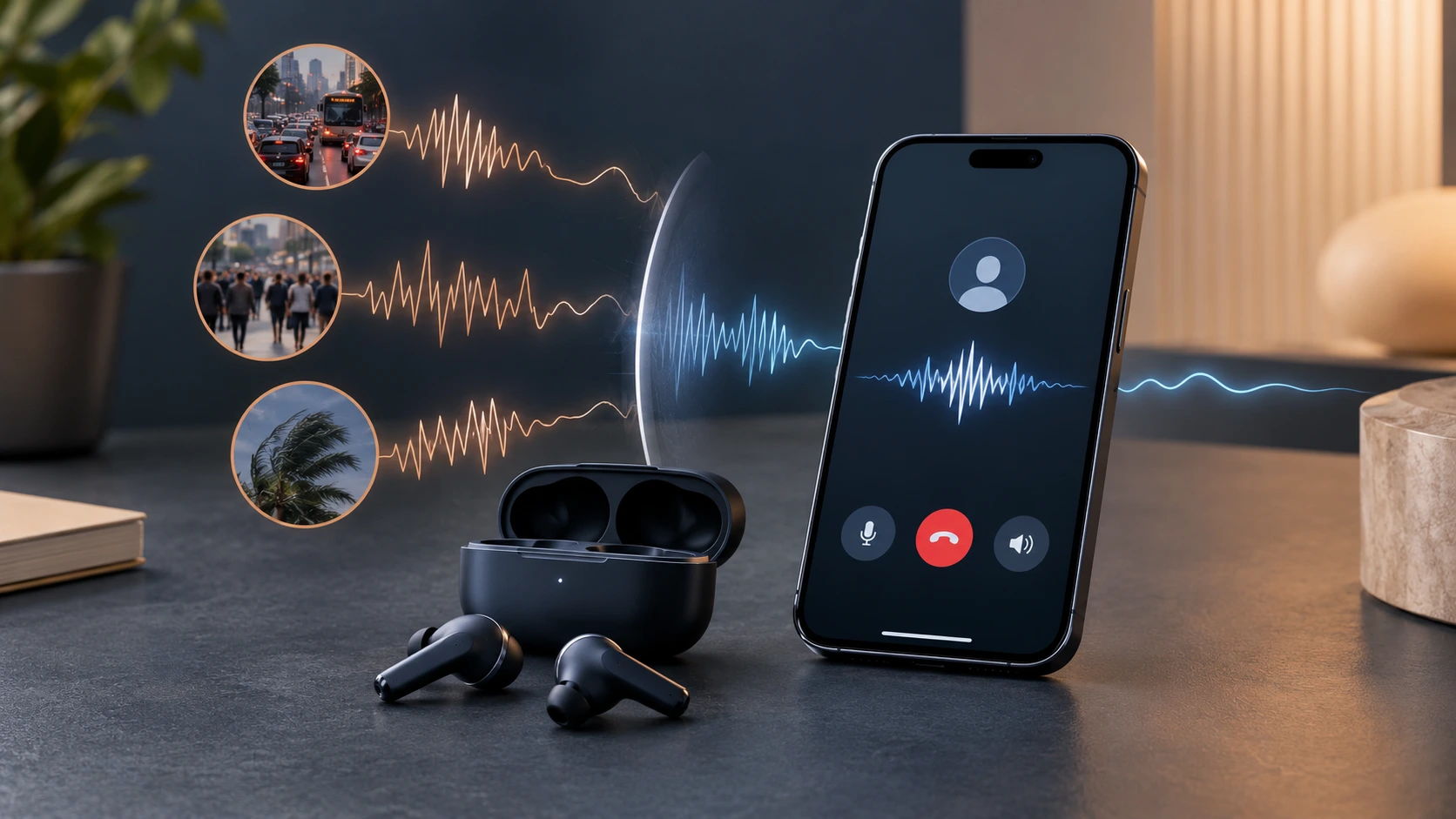
Environmental noise cancellation is about voice clarity, not personal listening comfort. It cleans up what the other person hears by filtering out background noise around your microphone.
The raw examples are practical: traffic, crowd noise, and wind; plus use cases like phone calls in noisy environments, online meetings, work calls, gaming communication, and voice recordings. So if you’re walking outside and taking a work call, ENC is doing its quiet little job in the background.
That makes ENC the more relevant feature when the main frustration is being misunderstood on calls. You know that awkward moment when someone says, “Sorry, can you repeat that?” over and over? That’s exactly the kind of problem ENC is trying to reduce.
It doesn’t make your surroundings silent for you. Instead, it focuses on cleaning up your voice before it reaches the listener. That’s a useful distinction because a lot of people assume any “noise cancellation” feature should help them hear better. Not always.
How ENC works in plain terms
Microphones pick up surrounding noise and filter it out from your voice before it reaches the listener. It’s basically a voice cleaner, not a sound blocker.
That’s why ENC matters most when call quality in noisy environments is the thing you’re actually buying for. If your job, study routine, or group chats depend on people hearing you clearly, this feature is more useful than it sounds at first glance.
It’s a bit like speaking into a microphone with someone lightly tidying up the mess behind you. Your voice stays in focus, while the distractions get pushed down.
What ANC changes when you want to hear less noise
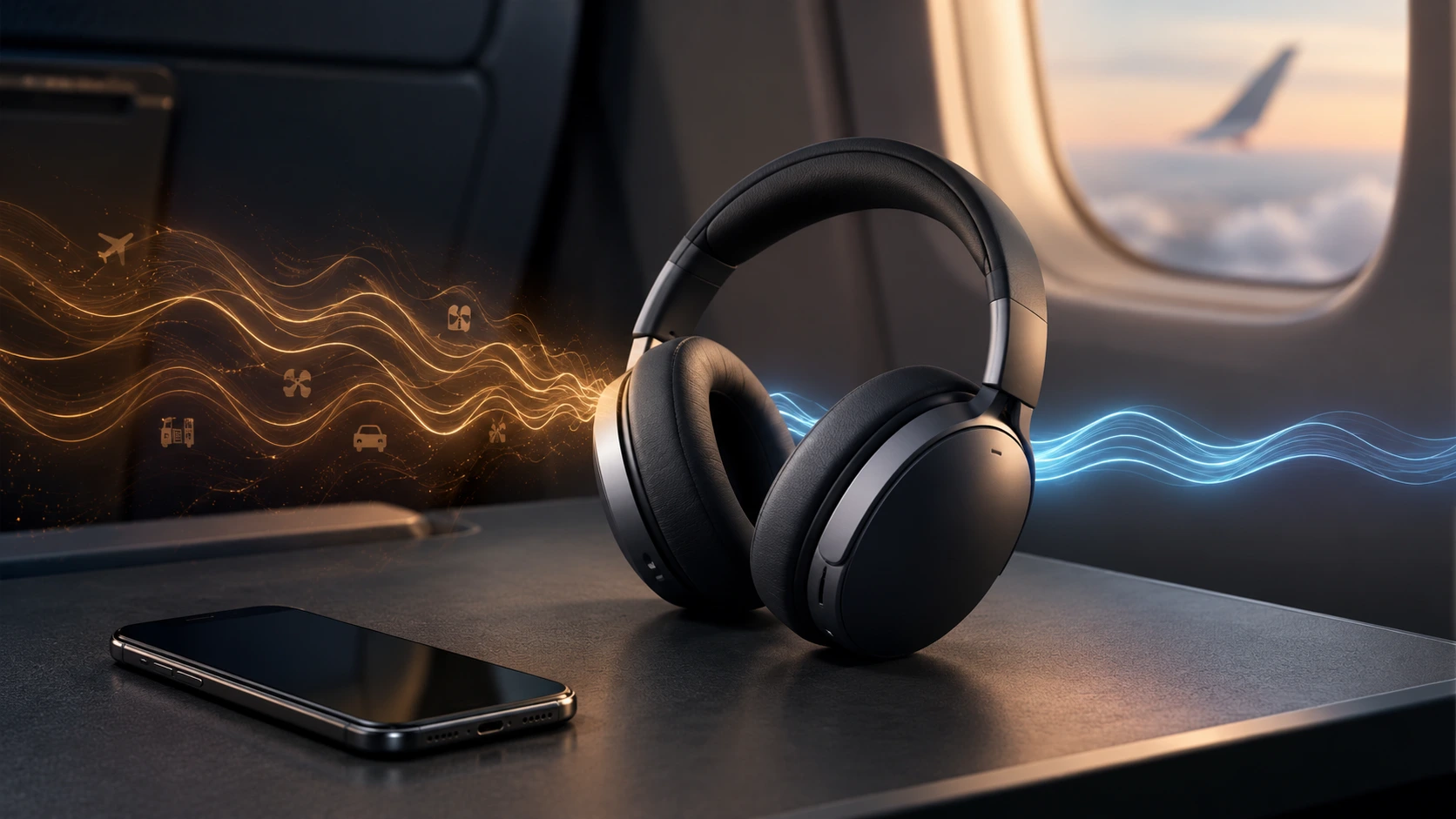
Active noise cancellation works in the opposite direction: it improves what you hear by reducing outside noise before it reaches you. That’s the point.
The article names the main constant noises it handles best: airplane engines, traffic noise, air conditioners, and office chatter. The best use cases are traveling or commuting, studying or working in noisy places, listening to music without disturbance, and watching movies or gaming.
So if your problem is distraction, ANC is the feature that changes the experience. It doesn’t just make things a little nicer. In the right environment, it can change the whole feel of your listening time.
That’s why people on planes love it. The engine hum doesn’t vanish completely, but it drops enough that music feels fuller and your brain doesn’t have to work as hard to ignore the background.
How ANC works without the jargon
ANC buds use microphones to pick up external sounds and generate opposite sound waves to cancel them out. It’s about reducing background noise, not eliminating every sound.
That’s also why it helps most with steady noise and less with sudden sounds like horns or voices. Constant rumble is easier to predict, so ANC has a better chance of dealing with it. Random sharp noises are trickier.
If you’ve ever wondered why a loud café still feels somewhat noisy even with ANC on, that’s the reason. The system is great at the hum of the room, but not a miracle shield against every little sound.
ENC vs ANC side by side: the difference that matters
The cleanest way to understand the two is to compare them directly. They are not competitors so much as different answers to different problems.
| Category | ENC | ANC |
|---|---|---|
| Purpose | Improves call quality for others | Improves the listening experience for you |
| Direction of noise control | Outward focus — your voice clarity | Inward focus — your hearing clarity |
| Technology use | Filters background noise during calls | Cancels noise using sound wave inversion |
| Ideal for | Calls, meetings, gaming communication | Music, travel, focus, entertainment |
That comparison is the whole story in one glance. ENC helps people hear you; ANC helps you hear less around you. Once that clicks, the decision stops feeling mysterious.
There’s also a practical side to this. If you spend most of your day on calls, the thing that annoys you is usually not outside noise in your ears — it’s the fact that other people can’t hear you clearly. On the other hand, if your biggest issue is staying focused or enjoying music in peace, then the outside noise is the problem.
Which one should you buy for your daily routine?
The decision comes down to what you use your earbuds or headphones for most often. There is no one-size-fits-all answer, and the wrong feature can feel like a disappointment after purchase.
If your day is full of meetings, frequent calls, noisy workspaces, or gaming communication, ENC fits better. If you want distraction-free music, travel often, or care more about immersive audio, ANC is the stronger choice.
For many people, the best answer is not choosing one feature at all. That might sound like a dodge, but it’s actually the most practical answer for a lot of real-life use cases.
Here’s the thing: if your routine changes during the day, your earbuds need to do more than one job. Maybe you take calls in the morning, listen to music at lunch, and answer messages while commuting home. In that case, a single-purpose feature can feel limiting pretty fast.
Why hybrid earbuds are often the practical answer
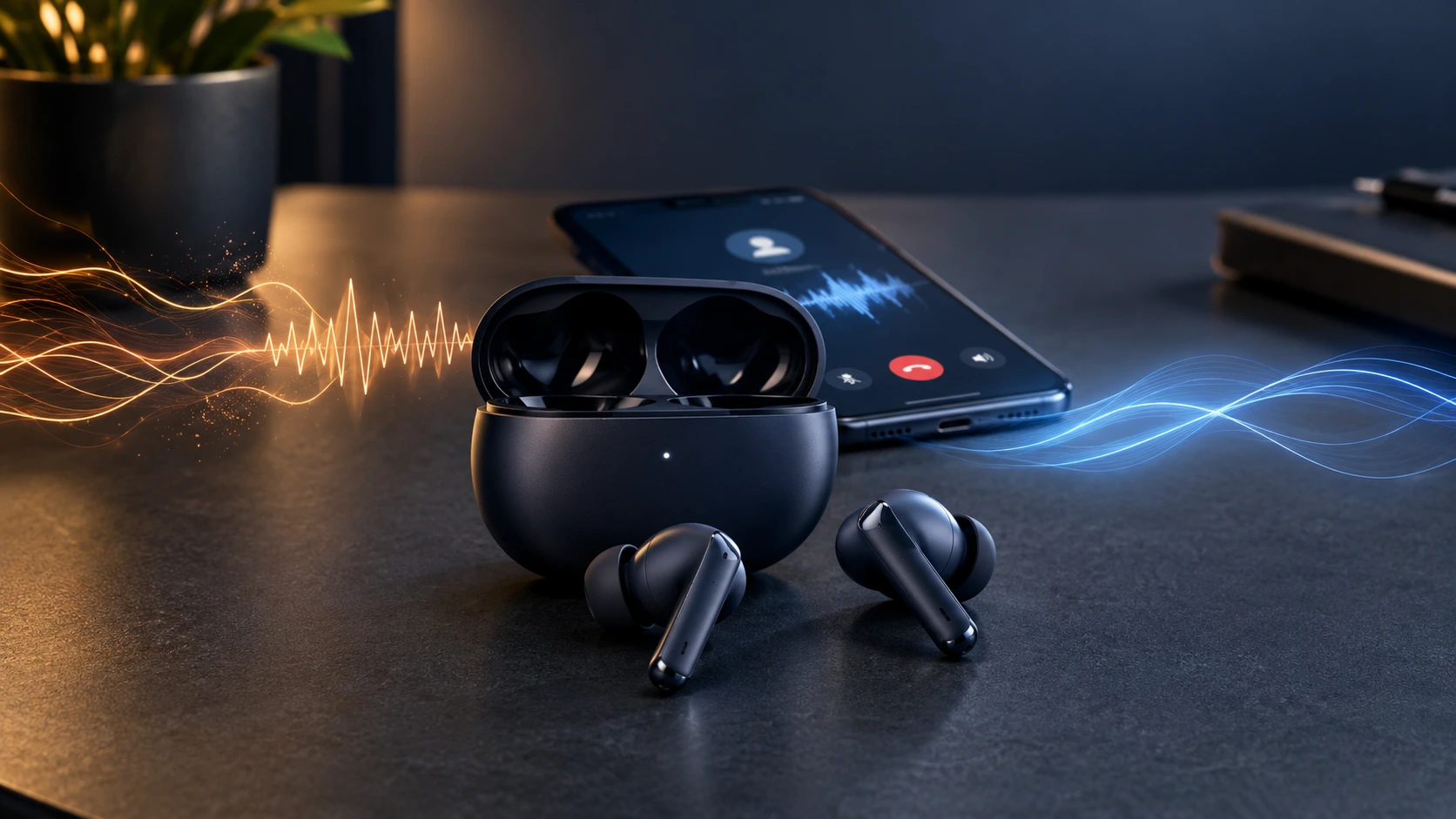
Many modern hybrid earbuds combine both technologies, giving you clear calls with ENC and noise-free listening with ANC. That’s why hybrid earbuds often make the most sense if you want one pair to handle everything.
The article also points readers toward true wireless earbuds and noise cancelling earbuds as the kind of products where that combined setup usually shows up. So if you’re shopping and you want flexibility, that’s a useful place to look.
It’s the kind of setup that quietly solves more problems than you may realize. You’re not constantly switching between “good for calls” and “good for listening.” You just wear one pair and let it adapt to the moment.
- Clear calls with ENC
- Noise-free listening with ANC
- A more complete everyday setup in one pair of earbuds
That’s why people often end up happier with hybrid earbuds than with a feature that only does half the job. It’s not always the cheapest option, but it can be the least annoying one long term.
Myths about ENC and ANC that keep people confused
A lot of buying mistakes come from assuming the two features do the same thing. They don’t, and the myths around them make that confusion worse.
ENC does not block noise for you — it improves what others hear during calls. ANC does not remove all noise completely — it mainly reduces constant noise, not sudden sounds like horns or voices.
The article’s blunt takeaway is that you often need both, because each technology solves a different problem. And once you stop expecting one feature to do everything, the whole category gets easier to understand.
Another common myth is that stronger sound control always means better earbuds overall. Not really. A pair can have decent ANC and still sound average for music. Or it can have solid ENC and still be uncomfortable for long wear. Noise control is just one part of the bigger picture.
So when you’re comparing models, don’t just ask, “Which one has noise cancellation?” Ask what kind, and what problem it’s actually meant to solve. That simple habit can save you from buying the wrong pair.
FAQ
These questions come from the last-stage doubts people have after they understand the basics but still need help choosing.
Q: What is the main difference between ENC and ANC?
ENC improves your voice for the person on the other end of the call. ANC reduces outside noise so you can hear more clearly.
Q: Which is better, ANC vs ENC for daily use?
Neither is universally better. If you take more calls, ENC matters more; if you listen, travel, or focus in noisy places, ANC matters more.
Q: Do I need both ANC and ENC in earbuds?
If you want one pair for calls and listening, yes, both can be useful. That’s why hybrid earbuds often offer the best balance.
Q: Can ENC and ANC work together in earbuds?
Yes. Many modern earbuds combine both so you get clearer calls and better noise reduction in the same device.
Conclusion
The practical answer is simple: ENC helps others hear you clearly, while ANC helps you hear better by reducing external noise. That is the real difference that matters.
If you want the right result, choose based on your main use case — communication, immersive sound, or both — and the better noise control choice becomes obvious.
So before you buy, ask yourself one honest question: what bothers you more, being misunderstood on calls or being distracted by the world around you? Once you answer that, the choice between ENC vs ANC becomes much easier.
And if your answer is “a bit of both,” that’s perfectly normal too. A lot of people aren’t shopping for one perfect feature. They’re shopping for fewer daily annoyances, and that’s a pretty good reason to be picky.