Charging Tech Made Easy: USB-C, MagSafe & Qi

Charging Tech Explained: USB-C, MagSafe, and Qi
If you think back just a decade ago, charging your gadgets meant dealing with a mess of wires, chunky adapters, and ports that only fit if you tried three times. Today, the world of charging technology feels completely transformed. Between USB-C, MagSafe and Qi wireless charging, our devices are not only juicing up faster but also in smarter and more convenient ways.
But here’s the thing—each of these charging technologies has its own story, strengths and quirks. So let’s break them down in plain everyday language.
USB-C Charging Tech: The Universal Hero
Remember the days when every phone brand had its own weird charger? You’d have a Nokia pin charger, a micro-USB for another phone, and maybe a separate one for your camera. Absolute chaos! USB-C has been a big step in the right direction because it’s all about simplicity and universality.
The biggest perk? One cable for almost everything. You can use a USB-C cable to charge your laptop, your phone, your tablet, even your gaming console controllers. And unlike the old USB plugs, you don’t have to squint and flip it five times to get it in—it’s reversible.
On top of that, USB-C supports fast charging and high-speed data transfer. If you’ve ever noticed your phone jump from 10% to 50% in about 20 minutes, that’s USB-C power delivery at work. Some laptops even run entirely on USB-C charging now, which means fewer bulky adapters to carry around.
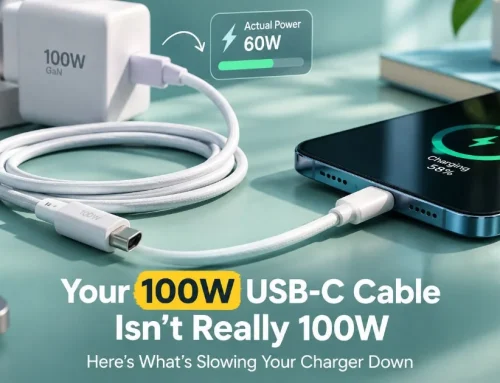
Of course, not everything is sunshine and roses. The only confusing part with USB-C is that not all cables are created equal. Some are designed only for charging, others support data transfer, and the “best” ones handle things like video output. So while it’s technically one port to rule them all, you still need to be mindful of cable quality.
MagSafe Charging Tech: Apple’s Magnetic Magic
If USB-C is about being practical, Apple’s MagSafe is about making charging feel almost…fun. Introduced with the iPhone 12, MagSafe is basically a magnetic wireless charging system. Instead of carefully lining up your phone on a charging pad, the magnets snap it into the perfect position every single time. No guesswork, no waking up in the morning to realize your phone didn’t charge because it was slightly off-center.
But MagSafe isn’t just about charging—it’s a whole ecosystem. Because of those magnets, you can attach wallets, car mounts, battery packs, and a bunch of clever accessories. Apple leaned into this idea and created a neat little world around it.
The speed is decent too—MagSafe can deliver up to 15W of charging power, which is not as fast as wired USB-C, but faster than standard Qi wireless charging. Plus, the magnetic alignment makes it more efficient than traditional wireless pads, where some power is often lost if the phone isn’t placed just right.
The catch? MagSafe is mostly locked into Apple’s universe. Sure, third-party brands make MagSafe-compatible accessories, but if you’re not an iPhone user, it’s not something you’ll experience.
Qi Wireless Charging Tech: Cut the Cords
Now let’s talk about Qi wireless charging (pronounced “chee”). This has been around for a while and is the most widely adopted wireless charging standard. If you’ve ever placed your phone on a charging pad at a café, hotel, or even in your car, chances are it was using Qi.
The beauty of Qi is convenience. You don’t have to mess with cables at all—just place your device on the pad, and it starts charging. It works for a wide range of devices too: phones, earbuds, smartwatches, even some electric toothbrushes.
But here’s the downside: Qi is slower than wired charging. Standard Qi charging usually tops out at around 7.5–10W for phones, while some high-end implementations push it to 15W. Compare that to USB-C fast charging that can go up to 100W for laptops, and you see the gap.
Also, Qi pads can be a little finicky. If your phone isn’t perfectly aligned, it might charge slowly or not at all. That’s actually where MagSafe improves on the Qi standard by adding magnets into the equation.
Still, Qi is everywhere and super handy for “casual” charging situations—like keeping your phone topped up while at your desk or bedside.
Which Charging Tech is the Best?
Here is the honest truth: there is not a single “best” charging technology. Each has its role based on what you value most.
- If you want speed and universality, USB-C is unbeatable.
- If you want ease and accessories that click into place, MagSafe feels premium.
- If you want no-fuss convenience across different brands, Qi wireless charging does the job.
Most of us actually end up using a combination of all three. You might use USB-C when you’re in a rush, MagSafe at your bedside for easy snap-on charging, and Qi at your office desk just for the convenience of dropping your phone on a pad.
The Future of Charging Tech
Looking ahead, it feels like the world is moving toward wireless everything. Apple has already removed chargers from the box and might one day remove the charging port altogether in favor of MagSafe or some advanced form of Qi. On the other hand, the EU has pushed hard for USB-C standardization, which means more and more devices will adopt it.
So while we may not see the end of cables tomorrow, the trend is clear: charging is getting faster, smarter and way more convenient than the spaghetti of wires we dealt with not too long ago.
Final Thoughts on Charging Tech
Charging tech may not sound as flashy as new camera tricks or AI features in phones but it is one of those things that genuinely changes how we live day to day. Whether you’re a fan of the all-purpose USB-C, the slick MagSafe experience, or the widespread Qi pads, there’s no denying that charging your devices has never been easier.
And hey, the less time we spend babysitting our battery percentage, the more time we get to actually enjoy our devices. That’s a win in my book.